How Companies Are Strengthening Policies for Safer Workplaces
- ishikalawstrings
- Mar 27
- 4 min read
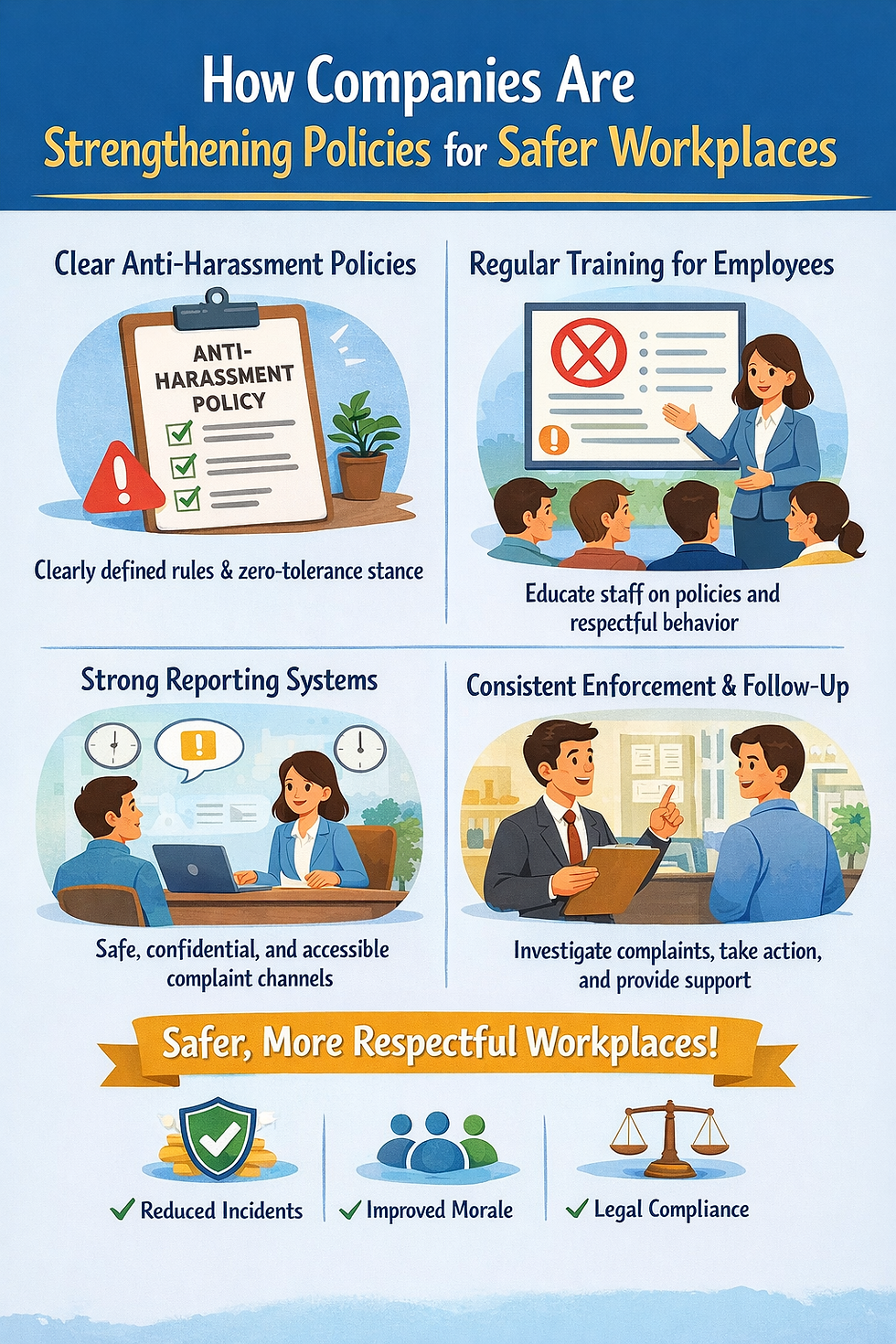
Workplace safety has become a central concern for organisations across industries. Employers are no longer limiting their efforts to basic compliance. There is a clear shift towards building environments where employees feel secure, respected, and valued.
This transformation is driven by legal requirements, employee expectations, and increased public scrutiny. Companies understand a safe workplace supports productivity, trust, and long term success. As a result, policies are becoming more robust, detailed, and practical.
The Changing Approach to Workplace Safety
Earlier, workplace safety policies were often reactive. Action was taken only after incidents occurred. Today, organisations adopt a preventive approach.
Companies focus on identifying risks before they escalate. Regular assessments help detect gaps in existing systems. This proactive mindset reduces the likelihood of misconduct.
There is also greater emphasis on employee wellbeing. Safety now includes physical, emotional, and psychological aspects. This broader approach reflects modern workplace realities.
Strengthening Internal Policies and Frameworks
Clear and comprehensive policies form the foundation of a safe workplace. Organisations are revising their frameworks to ensure clarity and relevance.
Policies now define unacceptable behaviour in simple language. They outline reporting procedures and consequences of violations. This clarity helps employees understand expectations.
Organisations also ensure policies are easily accessible. Digital platforms allow employees to review guidelines at any time. Regular updates keep policies aligned with legal developments.
Consistency in implementation is equally important. Policies must apply to all employees, regardless of role or seniority.
Emphasis on Prevention Through Training
Training has become a key tool in strengthening workplace safety. Employees need practical knowledge to recognise and prevent misconduct.
Interactive sessions help employees understand boundaries and appropriate behaviour. Real life examples make training more effective and relatable.
Many organisations invest in posh training for employees to ensure awareness of legal provisions and workplace standards. These programmes build confidence and encourage responsible conduct.
Training is no longer a one time activity. Regular sessions reinforce learning and keep employees updated.
Role of Leadership in Policy Implementation
Leadership plays a crucial role in shaping workplace culture. Policies are effective only when supported by strong leadership.
Senior management sets the tone through their actions and communication. A clear stance against misconduct sends a powerful message across the organisation.
Leaders also ensure fair enforcement of policies. They support investigation processes and maintain transparency. This builds trust among employees.
When leadership remains committed, policies become part of everyday practice rather than formal documents.
Creating Safe Reporting Mechanisms
A safe workplace requires effective reporting systems. Employees must feel comfortable raising concerns without fear.
Companies are introducing multiple reporting channels. These may include online platforms, dedicated helplines, and internal committees. Confidentiality remains a priority.
Clear procedures guide employees through the reporting process. This reduces uncertainty and encourages timely action.
Organisations also focus on protecting individuals who report issues. Safeguards against retaliation are essential for building confidence.
Incorporating Technology in Policy Enforcement
Technology has improved how organisations manage workplace safety. Digital tools streamline reporting, tracking, and resolution of complaints.
Online platforms allow employees to submit concerns easily. Automated systems ensure cases are recorded and monitored efficiently.
Training modules are also delivered through digital platforms. Employees can access learning materials at their convenience.
Data analytics helps organisations identify patterns and areas of concern. This insight supports better decision making and policy improvement.
Addressing Workplace Diversity and Inclusion
Modern workplaces are diverse. Employees come from different cultural, social, and professional backgrounds. Policies must reflect this diversity.
Organisations are adopting inclusive approaches to safety. They recognise different forms of harassment and discrimination. Policies are designed to protect all employees equally.
Inclusive communication plays an important role. Employees are encouraged to respect different perspectives and experiences.
A diverse and inclusive workplace strengthens collaboration and innovation. It also reduces the risk of conflict.
Regular Audits and Policy Reviews
Continuous improvement is essential for effective policies. Organisations conduct regular audits to evaluate their systems.
These reviews assess the effectiveness of policies and procedures. Feedback from employees provides valuable insights.
Based on these findings, companies update their frameworks. This ensures policies remain relevant and practical.
Regular reviews also demonstrate commitment to safety. Employees feel reassured when organisations take active steps to improve.
Role of Legal Expertise in Policy Development
Legal guidance is important in creating strong workplace policies. Organisations must align their frameworks with applicable laws and regulations.
Consulting a Posh lawyer ensures policies meet legal standards and protect organisational interests. Legal experts also assist in handling complex cases and investigations.
Their involvement reduces the risk of non compliance. It also adds credibility to the organisation’s approach.
Legal expertise helps companies navigate challenges with confidence and clarity.
Building a Culture of Accountability
Policies alone cannot ensure safety. Employees must take responsibility for their actions.
Organisations encourage accountability through clear communication and consistent enforcement. Employees understand consequences of misconduct.
A culture of accountability promotes ethical behaviour. It also discourages violations.
Peer influence plays a role as well. When employees uphold standards, others are likely to follow. This collective effort strengthens workplace safety.
Impact on Organisational Reputation
A safe workplace enhances an organisation’s reputation. Employees prefer companies which prioritise their wellbeing.
Clients and stakeholders also value ethical practices. Strong policies reflect professionalism and responsibility.
On the other hand, incidents of misconduct can damage reputation significantly. Public perception can change quickly in today’s digital environment.
By strengthening policies, companies protect their brand and build trust.
Future Trends in Workplace Safety Policies
Workplace safety will continue to evolve. Organisations are likely to adopt more advanced tools and strategies.
Artificial intelligence may assist in monitoring and analysing workplace behaviour. Predictive tools can identify risks early.
Training methods may become more interactive. Virtual simulations can provide practical learning experiences.
There will also be greater focus on mental health and emotional safety. Policies will expand to address emerging challenges in modern workplaces.
Companies must remain adaptable to stay ahead of these changes.
Conclusion
Companies are taking significant steps to strengthen policies for safer workplaces. This shift reflects a deeper commitment to employee wellbeing and organisational integrity.
Clear policies, effective training, and strong leadership form the foundation of this transformation. Technology and legal expertise further enhance these efforts.
A safe workplace is not achieved through compliance alone. It requires continuous effort, awareness, and accountability. Organisations which prioritise safety create environments where employees can thrive.
In the long term, strong policies not only prevent misconduct but also support growth, trust, and success.


Comments